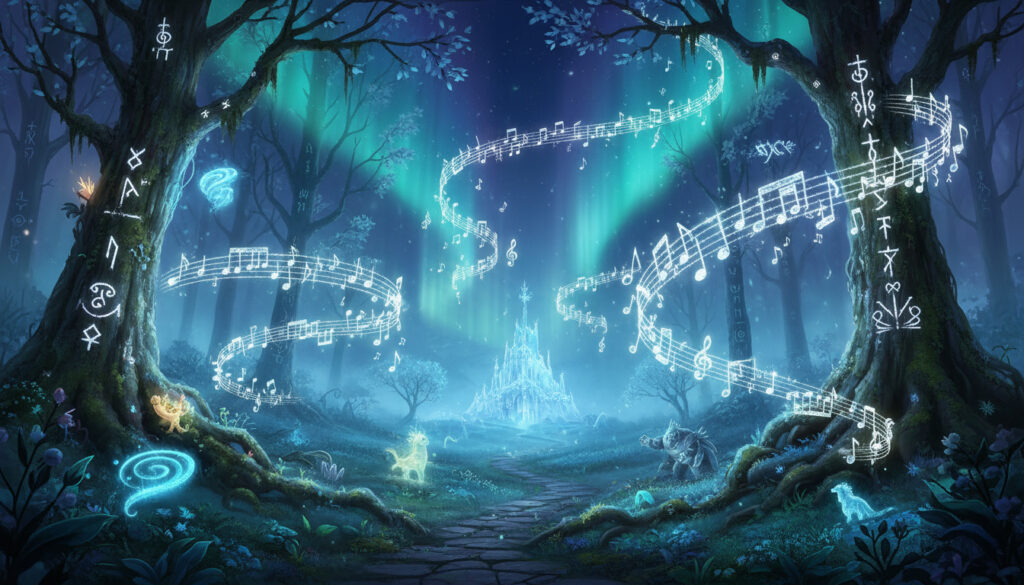
Frozen 2 – Phân Tích Chi Tiết Cốt Truyện Và Âm Nhạc
Introduction
Frozen 2 represents Disney’s most ambitious animated sequel to date, arriving six years after its predecessor fundamentally altered the studio’s approach to princess narratives. Released in November 2019, the film eschews the safe replication typical of franchise extensions, instead pursuing a darker, more psychologically complex meditation on change, maturity, and colonial legacy. Directors Jennifer Lee and Chris Buck returned to helm the project, joined by the original voice cast including Idina Menzel, Kristen Bell, Jonathan Groff, and Josh Gad. Unlike the first film’s contained fairy-tale structure, this installment sends Anna and Elsa beyond Arendelle’s borders into an enchanted forest harboring secrets about their family’s past and the origin of Elsa’s cryogenic powers.
The production demanded entirely new animation pipelines, particularly for the depiction of the elemental spirits—water, fire, earth, and air—that populate the enchanted Northuldra forest. While the original Frozen focused on sisterly reconciliation and self-acceptance, the sequel interrogates the responsibilities of leadership and the necessity of confronting uncomfortable historical truths. This evolution sparked considerable debate regarding the film’s suitability for its target demographic, though box office returns ultimately validated Disney’s risk-taking approach.
At a Glance
Release Date: November 22, 2019 (United States)
Directors: Chris Buck and Jennifer Lee
Production Budget: $150 million
Worldwide Box Office: $1.45 billion according to Box Office Mojo
Academy Award Nominations: Best Original Song (“Into the Unknown”)
Runtime: 103 minutes
MPA Rating: PG
Insights and Innovation
Thematically, Frozen 2 operates on registers inaccessible to its predecessor. Where the original film utilized magical elements as metaphors for emotional isolation, the sequel employs them to explore generational trauma and environmental stewardship. The revelation that Anna and Elsa’s grandfather perpetrated violence against the indigenous Northuldra people introduces a post-colonial critique rarely encountered in family entertainment. This narrative choice required extensive consultation with reindeer-herding Sámi communities to ensure respectful representation of their cultural traditions and vocal joik styles, which influenced the film’s score.
Technically, the production necessitated breakthroughs in elemental animation. The water spirit Nokk required engineers to develop new algorithms simulating liquid behavior interacting with organic forms—a challenge that consumed nearly twelve months of dedicated research. Similarly, Gale, the wind spirit, demanded entirely novel approaches to invisible character animation through the manipulation of leaves, snow, and debris. IndieWire’s technical breakdown details how these innovations pushed Walt Disney Animation Studios’ proprietary software beyond previous capabilities established during Moana’s oceanic sequences.
Comparative Analysis
| Metric | Frozen (2013) | Frozen 2 (2019) |
|---|---|---|
| Domestic Box Office | $400.7 million | $477.4 million |
| Worldwide Box Office | $1.28 billion | $1.45 billion |
| Rotten Tomatoes Score | 90% | 77% |
| Academy Awards Won | 2 (Animated Feature, Original Song) | 0 |
| Primary Antagonist | Hans (Prince) | None (Internal/Elemental conflicts) |
| Narrative Scope | Kingdom of Arendelle | Enchanted Forest & Dark Sea |
Production Details
Pre-production commenced secretly in March 2015, mere months after the original film completed its theatrical run. Jennifer Lee explained to Variety that the production team resisted pressure to rush the sequel, instead permitting a four-year development cycle that allowed the narrative to mature organically. Songwriters Kristen Anderson-Lopez and Robert Lopez returned to compose seven original songs, including “Into the Unknown,” which required Menzel to access a register distinct from “Let It Go”—specifically avoiding power-ballad replication while maintaining Broadway-caliber vocal demands.
The voice cast recorded dialogue separately across multiple years, with Gad noting that his sessions for Olaf spanned nearly three years as the character’s role shifted comedic responsibilities toward philosophical musings about aging. The animation team expanded to over 800 artists, nearly double the original crew, to accommodate the visual complexity of the autumnal setting and the elemental spirits’ non-corporeal designs.
Development Timeline
- : Disney officially confirms sequel development at shareholder meeting
- : Buck and Lee confirmed as returning directors
- : Original cast announces return during production commencement
- : First footage revealed at Disney fan event
- : Teaser trailer releases, achieving most-watched animated trailer record
- : Theatrical release in United States
- : Disney+ streaming debut
Narrative Clarity
The film’s central mystery revolves around Elsa’s identity as the Fifth Spirit—the bridge between humanity and magic. This revelation resolves the cliffhanger established in the first film regarding the origin of her powers, establishing that her mother Iduna belonged to the Northuldra tribe and saved her father Agnarr during the forest’s enchantment. The Ahtohallan glacier functions simultaneously as memory repository and source of ultimate truth, where Elsa discovers that her grandfather King Runeard constructed a dam not as gift but as weapon to subjugate the Northuldra and access their magic.
Anna’s parallel arc involves accepting her role as Arendelle’s queen, necessitating the destruction of that same dam to rectify ancestral wrongs—a decision that temporarily submerges the kingdom but ultimately restores ecological and magical balance. The sisters’ separation at the film’s conclusion, with Elsa remaining in the forest while Anna governs Arendelle, resolves the franchise’s central tension between duty and self-actualization without requiring either character to compromise their growth.
Critical and Cultural Analysis
Reception bifurcated along expectations of family entertainment versus mythological epic. The New York Times observed that while the film “lacks the first Frozen’s surprise factor,” it compensates through “visual grandeur and emotional maturity.” Critics consistently praised the animation quality and vocal performances while debating the narrative’s density; several reviewers noted that younger viewers might struggle with the plot’s reliance on expository flashbacks and environmental mysticism.
Culturally, the film’s engagement with indigenous representation generated substantive discourse. The Sámi collaboration resulted in the Verddet advisory group, which reviewed script elements and character designs to avoid the appropriation pitfalls common in Hollywood’s treatment of native narratives. This consultation process influenced the depiction of the Northuldra as technologically sophisticated stewards of the forest rather than mystical primitives, though some scholars argued the film’s resolution—reconciliation without sustained structural accountability—oversimplified historical restitution.
Commercially, the film surpassed its predecessor financially despite mixed critical consensus, demonstrating the franchise’s resilience as a cultural phenomenon. Billboard reported that the soundtrack achieved fourth position on the Billboard 200, with “Into the Unknown” receiving Academy Award and Grammy nominations, cementing the Lopez songwriting team’s status as architects of the modern Disney musical sound.
Statements from the Production
“We didn’t want to make a movie about a girl with ice powers anymore. We wanted to make a movie about a woman understanding the complexity of her lineage and the cost of leadership.”
— Jennifer Lee, Co-Director and Writer
“The challenge wasn’t hitting the notes—it was finding the emotional desperation between the notes. Elsa isn’t celebrating her power anymore; she’s questioning its price.”
— Idina Menzel, Voice of Elsa
Summary
Frozen 2 succeeds as a rare sequel that prioritizes thematic evolution over commercial replication. By relocating the narrative from castle corridors to enchanted woodlands, the film expands its universe without sacrificing the central sisterly bond that anchored the original. The technical achievements in elemental animation established new benchmarks for the medium, while the engagement with Disney animation legacy—both honoring and subverting fairy-tale conventions—positions the work as a transitional artifact between the studio’s Renaissance traditions and its contemporary identity as a platform for diverse storytelling. Though its narrative density occasionally strains the traditional three-act structure of animated features, the film ultimately delivers a sophisticated exploration of maturity, reconciliation, and environmental consciousness that elevates it beyond typical franchise extensions.
Frequently Asked Questions
Is Frozen 2 based on a specific Hans Christian Andersen story like the original?
Unlike the first film, which loosely adapted “The Snow Queen,” Frozen 2 utilizes an entirely original screenplay. While it incorporates Nordic folklore elements and Sami cultural motifs, the narrative of the enchanted forest and the elemental spirits was created specifically for this sequel by Jennifer Lee, Chris Buck, and Marc Smith.
Why does Elsa travel to the Dark Sea alone?
Narratively, Elsa’s isolation reflects her acceptance that some journeys require solitary confrontation. The Dark Sea represents both the source of her power and the repository of her family’s secrets—specifically the truth about King Runeard’s betrayal. Her solo crossing of the sea demonstrates her evolution from the frightened girl hiding in her bedroom to a woman capable of facing historical truth without the protective buffer of her sister’s optimism.
What happens to Olaf during the film’s climax?
When Elsa temporarily dissipates after venturing too deep into Ahtohallan, Olaf—the magical construct of her power—fades into snowflakes before Anna’s eyes. This moment serves as the film’s emotional nadir, forcing Anna to proceed with destroying the dam while grieving her sister and companion. Olaf’s restoration occurs once Elsa thaws after Anna’s act of true leadership breaks the curse, reinforcing the film’s thematic connection between honest reckoning and restoration.
Will there be a Frozen 3?
As of the film’s release, Disney has not officially announced a third theatrical installment. Jennifer Lee has indicated that the narrative arc completed in Frozen 2 provides satisfying closure for the characters’ primary developmental journeys, though she acknowledged that the studio remains open to future projects should compelling stories emerge. The 2023 short film “Once Upon a Snowman” and various Disney+ spinoffs suggest the franchise continues through ancillary media rather than feature-length sequels.
Them bai lien quan
 Công Viên Bờ Sông Sài Gòn – Địa chỉ, giờ mở cửa và sự kiện mới nhất
 Mao Sơn Tróc Quỷ Nhân: Bản dịch và chuyển thể Mới nhất
 Đau thần kinh tọa: Cẩm nang về triệu chứng và cách điều trị
 Ca Heo TV: Rủi ro pháp lý và kênh xem bóng đá thay thế
 Oan Gia Chung Nhà – Chap 163 Mới Nhất Trên TruyenQQ
 Thứ Hạng Của Sông Lam Nghệ An – Cập Nhật Bảng Xếp Hạng V.League 2025/26
 Hoàng hậu Ki – Tổng hợp nội dung, diễn viên và sự thật lịch sử
 Trò chơi miễn phí online – Không cần tải, chơi ngay